What the dancers wear
Uzbek costume: ikat, suzani and doppa
A short guide to the textiles and headwear behind Uzbek dance costume: ikat weaving, suzani embroidery and the embroidered doppa skullcap.
Reserve a seat in Samarkand ↗Quick answer
Uzbek costume draws on three crafts. Ikat is a weaving technique in which the yarns are dyed before they are woven, and Wikipedia calls it common in Uzbek culture. Suzani are embroidered textiles that brides traditionally made for their dowry. The doppa is an embroidered skullcap whose designs symbolise the wearer's background. A concert show uses such details to mark a region or an era.
Why costume matters in a dance show
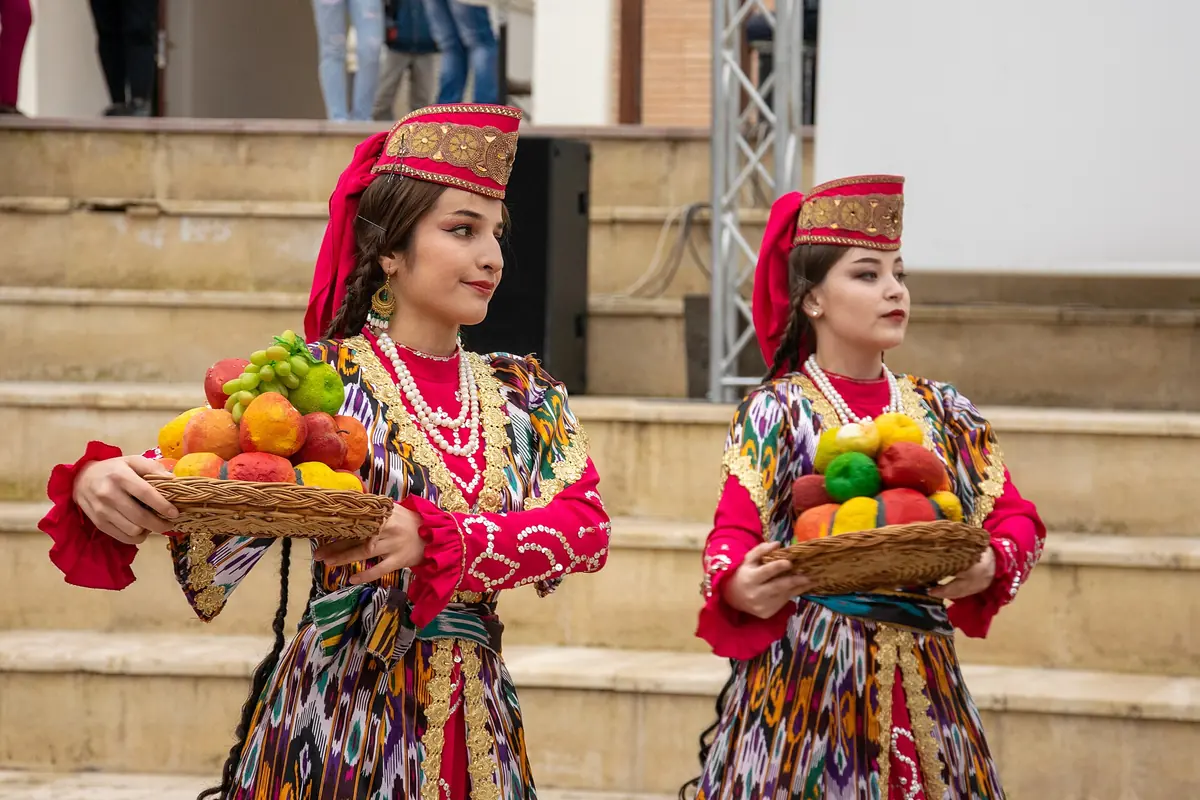
In a staged folk show the costume does part of the telling. The Marokand Concert Hall ticket describes luxurious, hand-crafted traditional costumes, each one telling the story of a different era and region. You do not need to know the textile vocabulary to enjoy that, but a little of it turns a bright blur into something you can read: a pattern, a headpiece, a cloth that reached Samarkand along the Silk Road. These three crafts are the ones Wikipedia describes most fully for Uzbekistan.
Ikat
Ikat is a dyeing technique for patterning textiles in which, as Wikipedia explains, the resist is applied to the yarns before they are woven into cloth. Wikipedia says ikat is a common weaving technique in Uzbek culture and that Uzbek ikat is distinguished by bold and flamboyant patterns. It lists Bukhara, Samarkand, Hotan and Kashgar among the Silk Road oases famous for fine silk ikat.
Suzani
Suzani are embroidered and decorative tribal textiles, made in Uzbekistan as well as in Tajikistan, Afghanistan and Iran, according to Wikipedia. The word comes from Persian and means needle. Wikipedia says suzanis were traditionally made by brides as part of their dowry and were given to the groom on the wedding day, and that extremely few examples survive from before the late 18th and early 19th centuries. Its list of types includes a Nurata suzani, made in the Uzbek town of Nurata, and others from Samarkand and Bukhara.
The doppa
The doppa is a traditional square or round skullcap worn by the Uyghur and Uzbek peoples of Central Asia, and Wikipedia calls it the national headwear of both. Doppas have intricate embroidered designs that symbolise elements of the wearer's background, and they are worn by men, women and children of all ages. There are several types, distinguished by their embroideries or place of origin, but no agreed standard of classification. The earliest depictions are in 15th-century art from present-day Uzbekistan, where miniatures show round caps with embroidered edges.
Reading the colours and patterns
Wikipedia says doppas convey different meanings through their styles, colours, sizes and decorations, and that designs may indicate the wearer's gender, hometown, ethnicity, marital status, social status, wealth or occupation. That is a general statement about the cap, not a code for any one performer, and a stage costume may borrow the look without carrying the meaning. Still, it is a good habit to watch the headwear and the cloth for differences between one scene and the next, because the ticket says each costume stands for a different era and region.
Hats in the city's trade
Samarkand's own history includes a hat trade. Wikipedia's Registan article says the Chorsu trading dome, behind the Sherdar Madrasa, began as a bazaar built in the 15th century and was rebuilt in the 18th century, becoming a hat market. The current building dates from 1785, and since 2005 it has belonged to the Academy of Arts of Uzbekistan and serves as an art gallery. The detail is small but telling: hats and textiles have long been part of the city's trade, and a costume show puts that tradition on stage.
Who this isn't for
This guide does not claim to describe the exact costumes in the show, which are the organiser's choice and can change, and it does not give a buyer's guide to antique textiles. If you want to see antique suzani, ikat or doppas up close, a museum or a specialist gallery will serve you better than a concert hall. If you want to buy textiles, ask for the maker's name and the materials, and compare before you pay. For a first look at Uzbek costume in motion, a one-hour show is a fair introduction.
Frequently asked questions
What is ikat?
A dyeing technique in which the resist is applied to the yarns before they are woven into cloth. Wikipedia calls it a common weaving technique in Uzbek culture.
What does suzani mean?
The word comes from Persian and means needle. Suzani are embroidered textiles that brides traditionally made as part of their dowry.
What is a doppa?
A traditional embroidered skullcap, square or round, worn by Uzbek and Uyghur peoples. Its designs symbolise elements of the wearer's background.
Will the show use these textiles?
The ticket describes hand-crafted traditional costumes, but it does not itemise them, so no specific textile is promised.
Sources